
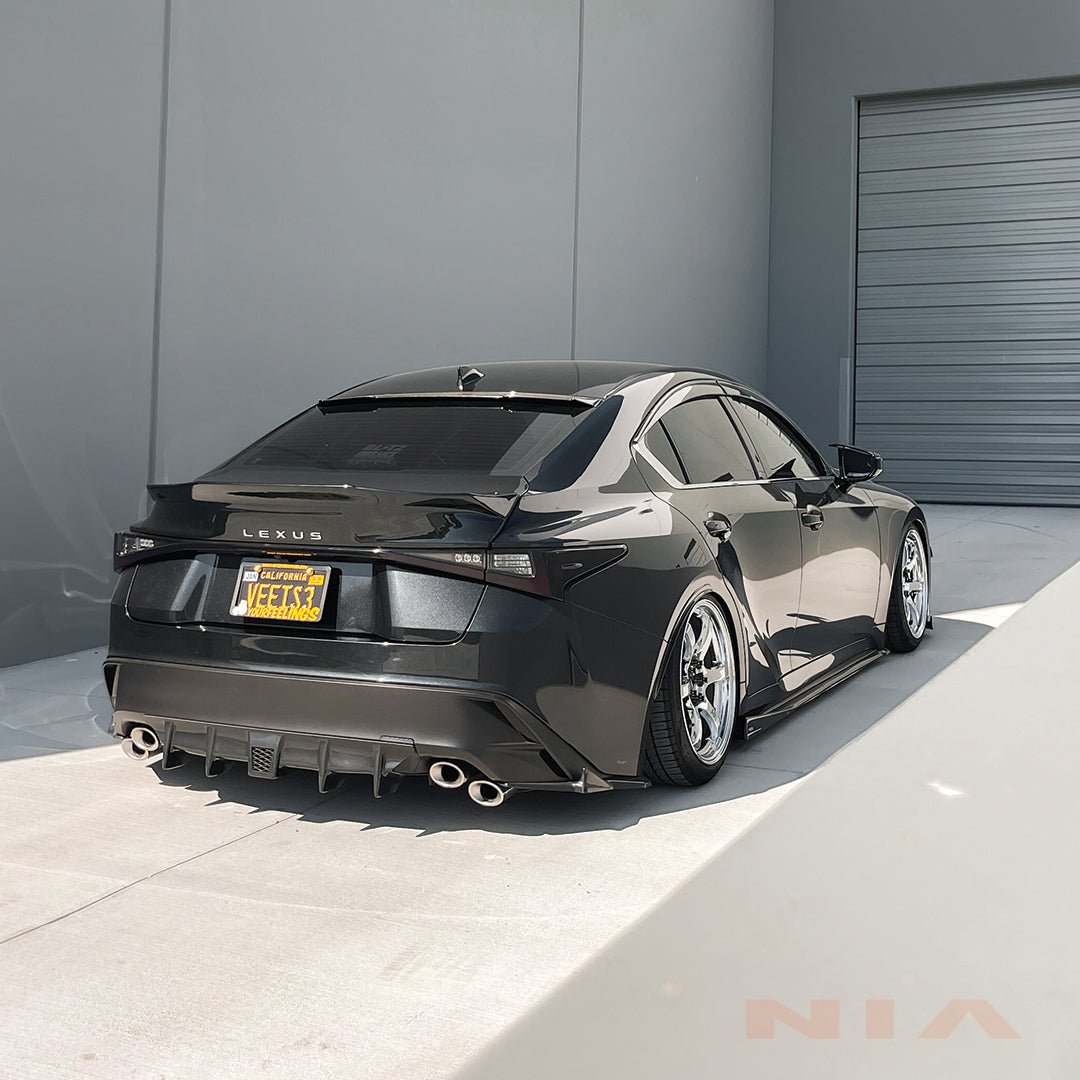
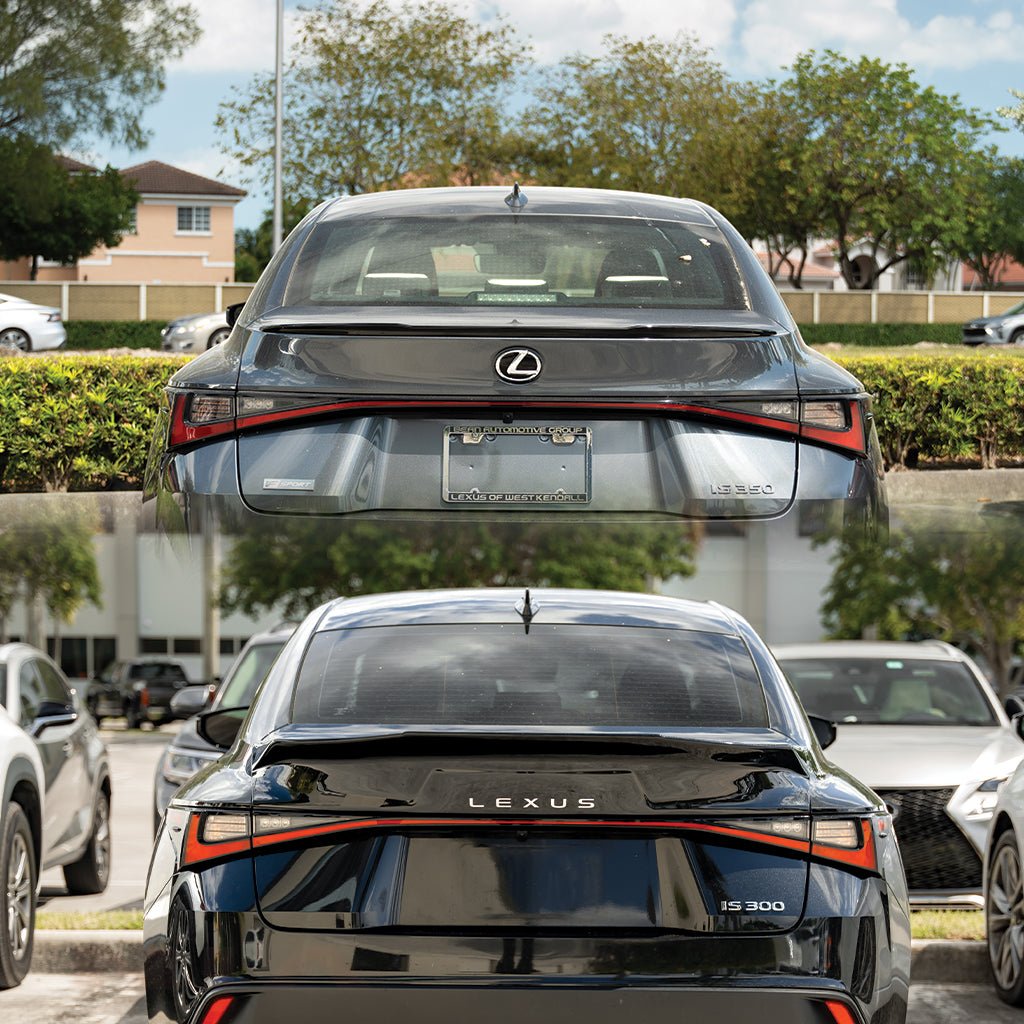
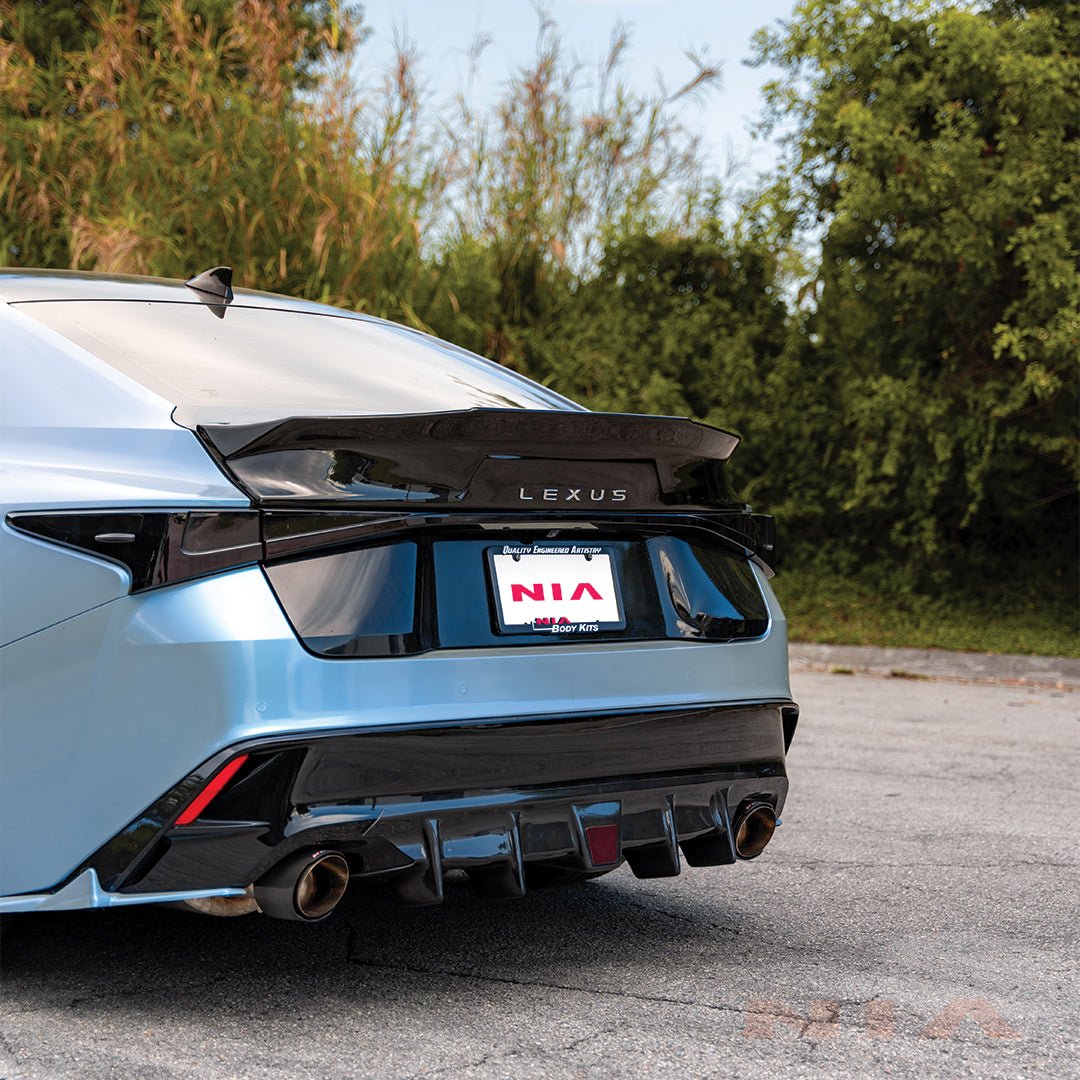
1. Sedan: rear of the IS300/IS350 (2021-present) with duck-bill spoiler
6
Design & Style Highlights
- The photograph shows a dark-painted (Caviar Black) version of the Lexus IS300 (2021 onward) equipped with an aftermarket or enhanced “duck-bill” style trunk spoiler: a raised lip that extends from the edge of the trunk lid.
- The duck-bill spoiler adds a dramatic upward flare to the rear profile, giving the sedan a more aggressive, performance-oriented stance.
- The overall rear design of the IS emphasizes angular taillights and a strong horizontal beltline. The spoiler accentuates the width and visually pushes the rear outward.
- The diffuser and quad-tip exhaust configuration (visible in some angles) further enhance the sporty character. The dark paint helps unify the surfaces, making the spoiler appear as a seamless extension rather than an add-on.
- From a styling standpoint, this rear is leaning visibly toward the “sport sedan” aesthetic: low, wide, purposeful. The spoiler is not subtle—it broadcasts performance intentions and visual attitude.
Impression & Context
- The duck-bill spoiler signals an owner who wants their sedan to look athletic, perhaps track-ready or visually tuned.
- The image suggests a blend of luxury (through the Lexus badge, high-gloss black paint, refined surface treatment) + performance cues (spoiler, diffuser, aggressive stance).
- In terms of brand language, Lexus often blends comfort and refinement, but here the styling leans more to the “refined sport” end of the spectrum.
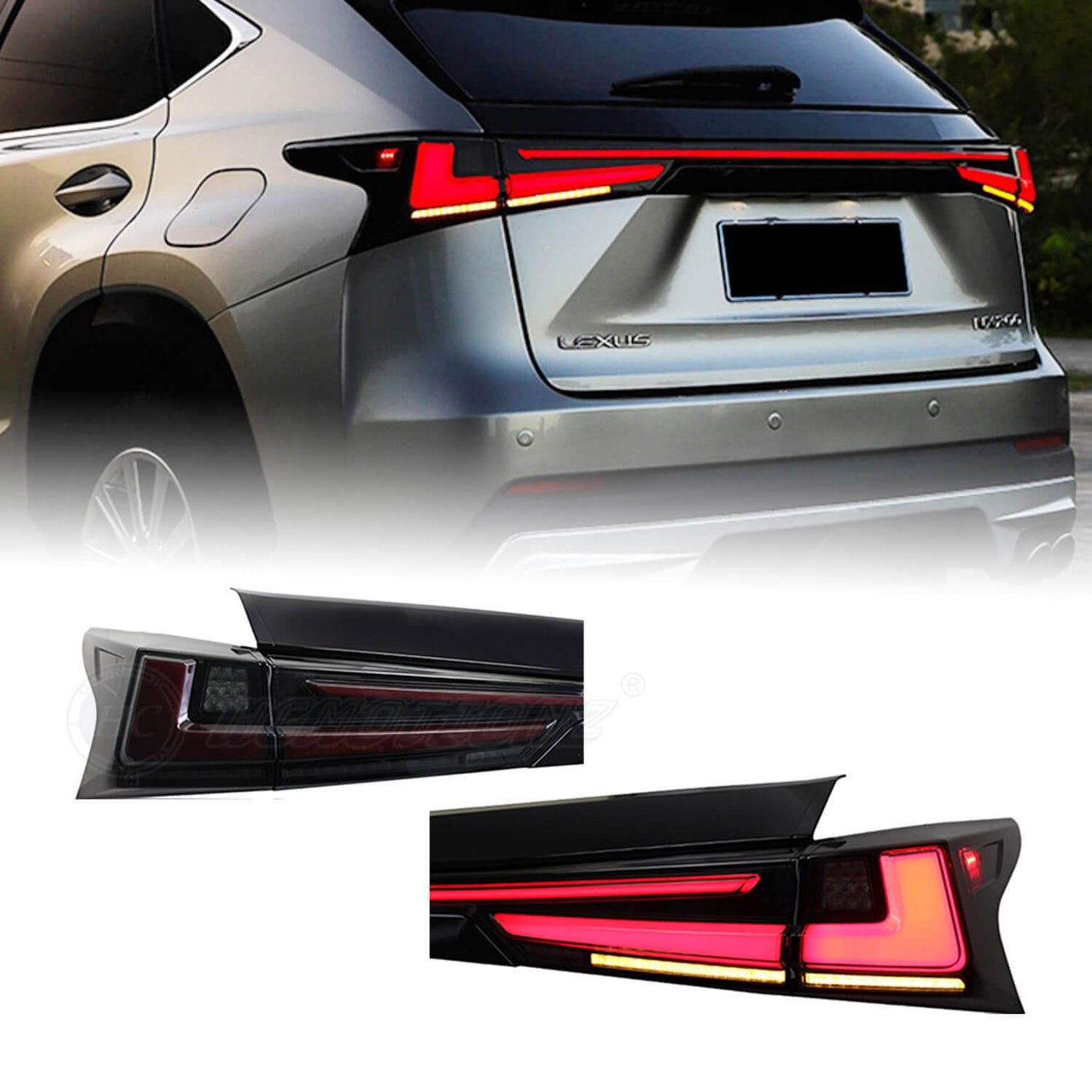
2. Crossover: rear of the 2022 NX compact luxury SUV

6
6
Design & Style Highlights
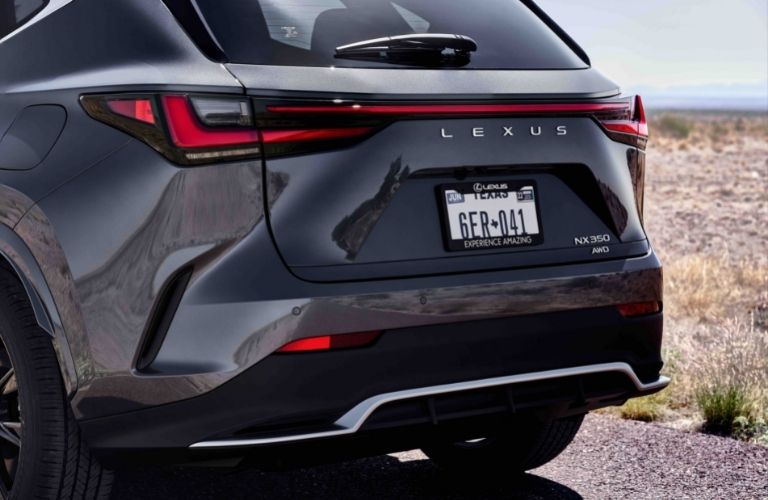
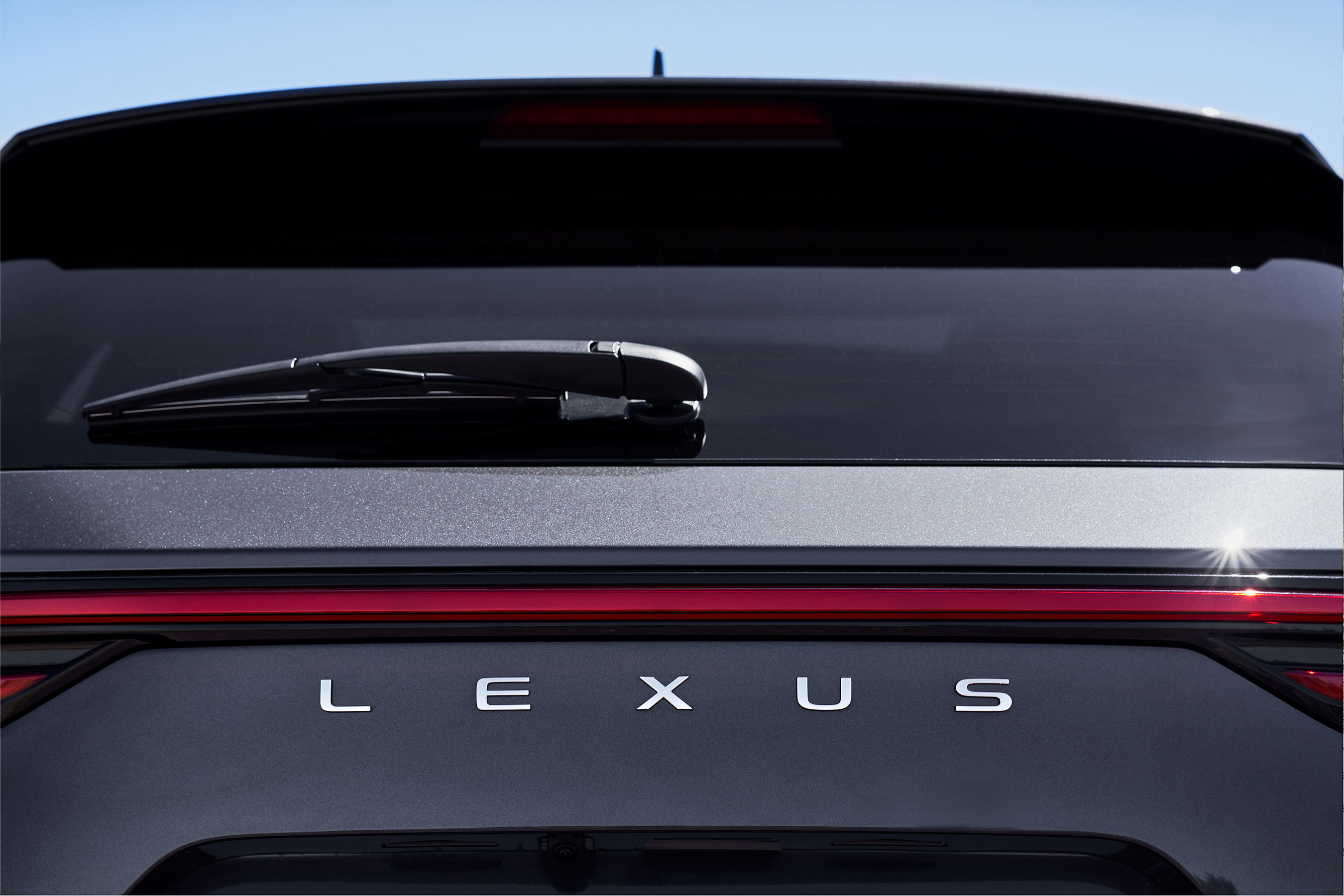
- This image shows the rear of the Lexus NX (2022-model generation) which introduces a full-width blade-style LED tail lamp across the rear, along with a centered “LEXUS” wordmark rather than a small “L” emblem. Lexus USA Newsroom+2Lexus USA Newsroom+2
- The styling seeks a modern, minimalist, premium expression: clean surfaces, horizontal emphasis, and subtle detailing. The full-width tail light ties the two haunches together and creates visual width.
- The rear bumper and lower diffuser area are less aggressive than the sedan above; they have more subdued contours, with perhaps chrome or silver trim elements rather than overt performance styling.
- The crossover profile by nature is taller, more upright, and oriented toward versatility rather than outright sport posture. Yet the design does not shy away from style — sharp edges, bold badge placement, and the LED bar all give it presence.
Impression & Context
- The NX’s rear design feels contemporary, luxurious and technology-forward: the full-width lamp is a key design signal of the new Lexus design language. Lexus USA Newsroom
- The styling is less about “sport sedan” aggression and more about upscale refinement with a hint of dynamic attitude. It signals a crossover that wants to look premium and fresh, rather than track-honed.
3. Comparative Analysis — Key Differences & What They Mean
| Feature | IS Sedan with Duck-Bill Spoiler | NX Crossover Rear Design |
|---|---|---|
| Stance & Implication | Low, wide, aggressive; performance-tuned appearance. The spoiler visually lowers the trunk edge and extends the rear profile. | Taller, upright crossover stance; more about presence and luxury than overt sportiness. |
| Spoiler/Rear Lid Treatment | Spoiler is prominent, aftermarket-style, performance-centric. Adds visual flair and suggests modification. | No large spoiler; instead emphasis on clean lid, integrated badge and full-width lighting. Sports modern luxury. |
| Lighting & Badge Treatment | Traditional rear light clusters for the sedan; performance cues dominate. | Full-width LED tail lamp bar and modern “LEXUS” badging reflect a new design identity. Lexus USA Newsroom+1 |
| Targeted Mood | Sport sedan owner who values aggressive styling and possibly customization. Visual cues of speed, road-presence. | Upscale crossover buyer seeking luxury, modern tech styling, and brand identity rather than track look. |
| Design Philosophy | Bespoke and performance-enhanced (via spoiler). Rear design caters to aftermarket aesthetic and bold statement. | OEM premium design language: unified brand identity, clean surfaces, light signature key. |
| Visual Flow | The spoiler disrupts the clean trunk edge to create a layered look; the diffuser and exhaust speak “sport”. | The rear flows smoothly; horizontal lighting unifies rear, fewer aggressive protrusions, overall a refined finish. |
4. What to Take Away
- If you’re looking at styling cues alone: the sedan example is all-in on performance styling, while the crossover example is all-in on luxury-tech styling.
- The choice between the two (or the design directions) comes down to what statement you want: “I drive a sporty sedan that stands out and performs” vs. “I drive a modern premium crossover with refined design and brand identity”.
- Both designs reflect different aspects of Lexus’s design evolution: the NX showcases the newer full-width light bar and centralized wordmark badge, signaling the brand’s future direction. The IS variant (especially with the added spoiler) stands on the performance-tuned side of things, mixing aftermarket flair with luxury sedan roots.
5. Final Thoughts
In sum: if I were writing a headline for each image, I might say:
- Sedan: “Aggressive in Black – The IS300/350 with Duck-Bill Spoiler: Performance meets refinement.”
- Crossover: “Modern Luxury Tech – The 2022 NX Rear: Bold, clean, unified and on-brand.”
Each has its own strength and target audience. The sedan’s rear is loud, bold, tuned for presence. The crossover’s rear is elegant, tech-savvy, unmistakably modern.